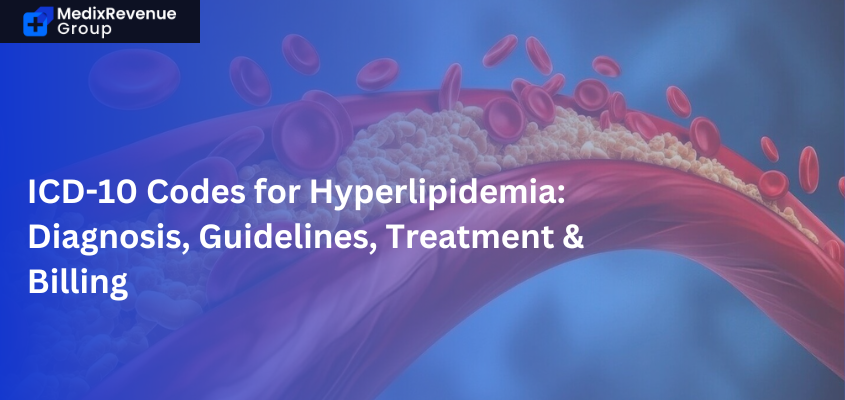
Hyperlipidemia commonly referred to as high cholesterol is one of the most prevalent metabolic disorders encountered in primary care and cardiology practices. It plays a central role in cardiovascular risk, contributing to heart attacks, strokes, and peripheral vascular disease if left unmanaged. Despite its prevalence, many providers struggle with proper documentation, coding, and billing, which can lead to denials, delayed payments, or compliance issues.
This guide walks healthcare providers through ICD-10 coding for hyperlipidemia, clinical evaluation, treatment guidelines, and best practices for billing, ensuring that claims are accurate, compliant, and fully reimbursed.
Understanding Hyperlipidemia
Hyperlipidemia occurs when lipid levels are abnormally high in the bloodstream, which can accelerate plaque formation in arteries and increase cardiovascular risk. The main lipid components include:
- Low-density lipoprotein (LDL) cholesterol – Often called “bad cholesterol,” elevated LDL contributes directly to arterial plaque and atherosclerosis.
- High-density lipoprotein (HDL) cholesterol – Known as “good cholesterol,” low HDL is associated with higher cardiovascular risk.
- Triglycerides – Elevated levels contribute to vascular inflammation and atherosclerotic changes.
Symptoms are typically silent, making routine screening essential. Most patients are diagnosed through lipid panels or routine metabolic labs. Untreated hyperlipidemia can lead to:
- Coronary artery disease
- Myocardial infarction
- Stroke or transient ischemic attacks
- Peripheral artery disease
Given its silent nature and high risk, early detection, accurate coding, and appropriate management are critical.
ICD-10 Codes for Hyperlipidemia
Hyperlipidemia coding depends on specific lipid abnormalities and etiology. Correct selection is crucial for reimbursement and to avoid denials. Common ICD-10 codes include:
1. E78.0 – Pure Hypercholesterolemia
- Applied when LDL cholesterol is elevated without other lipid abnormalities.
- Frequently used in patients with primary hypercholesterolemia.
- Accurate documentation should include specific LDL values and patient risk factors.
2. E78.1 – Pure Hyperglyceridemia
- For elevated triglycerides only.
- Often associated with metabolic conditions like obesity or uncontrolled diabetes.
- Documentation should specify triglyceride levels to justify therapy and follow-up.
3. E78.2 – Mixed Hyperlipidemia
- When both cholesterol and triglycerides are elevated.
- Commonly occurs in patients with metabolic syndrome or type 2 diabetes.
- Coding should reflect both components, supported by lab values.
4. E78.4 – Other Hyperlipidemia
- Captures rare or atypical lipid disorders not specified elsewhere.
- Includes genetic disorders like familial combined hyperlipidemia.
- Documentation should describe the abnormality, lab results, and any secondary causes.
5. E78.5 – Hyperlipidemia, Unspecified
- Use only when the specific lipid type is unknown.
- Often used as a temporary placeholder while awaiting lab results.
- Payers prefer specific codes, so E78.5 should be limited to exceptional circumstances.
Tip: Always choose the most specific code available. For example, if LDL is elevated without triglycerides, use E78.0 rather than E78.5. Specific coding improves reimbursement accuracy and reduces audit risk.
Clinical Evaluation & Documentation Guidelines
Accurate documentation ensures clinical clarity and payer compliance. Providers should include:
Lipid Panel Results
- Document LDL, HDL, total cholesterol, and triglycerides.
- Record abnormal values and compare with reference ranges.
- Repeat tests if monitoring therapy efficacy.
Secondary Causes Assessment
- Identify underlying conditions like hypothyroidism, nephrotic syndrome, or liver disease.
- Note medications affecting lipid metabolism, such as corticosteroids, diuretics, or antiretrovirals.
Family & Medical History
- Include family history of hyperlipidemia or early cardiovascular disease.
- Document personal history of ASCVD events to support treatment intensity.
Treatment Plan
- Lifestyle modifications: diet, exercise, weight control.
- Pharmacologic therapy: statins, fibrates, ezetimibe, or PCSK9 inhibitors.
- Monitor adherence and therapy adjustments.
Pro Tip: Many insurers require lab results and clinical notes to justify initiation or escalation of therapy, particularly for statins.
Treatment Guidelines
LDL levels, overall cardiovascular risk, and comorbidities guide treatment.
- Encourage a diet low in saturated fats and cholesterol.
- Recommend regular physical activity (150 minutes/week).
- Focus on weight management and reducing visceral fat.
- Statins – First-line therapy for most patients, effective at lowering LDL and ASCVD risk.
- Fibrates – Mainly for hypertriglyceridemia management.
- Ezetimibe or PCSK9 inhibitors – For patients at high cardiovascular risk not controlled with statins alone.
- Repeat lipid panels 4–12 weeks after therapy initiation.
- Adjust therapy based on response and tolerance.
- Document adherence counseling and medication changes to support billing for chronic disease management.
- Documentation Tip: Include both clinical findings and patient counseling to justify pharmacologic therapy and chronic care management.
Billing and Coding for Hyperlipidemia
Billing for hyperlipidemia isn’t just about entering a diagnosis code and submitting a claim. It’s about creating a complete, defensible, and reimbursable medical record that ties together clinical evaluation, lab results, and therapeutic interventions. Proper coding ensures payers understand the medical necessity of your services, avoids denials, and protects your revenue.
Step 1: Selecting the Correct ICD-10 Code
Hyperlipidemia has multiple ICD-10 options, and choosing the right one is critical:
- E78.0 – Pure Hypercholesterolemia: Elevated LDL only.
- E78.1 – Pure Hyperglyceridemia: Elevated triglycerides only.
- E78.2 – Mixed Hyperlipidemia: Both cholesterol and triglycerides are elevated.
- E78.4 – Other Hyperlipidemia: Rare or unusual lipid disorders.
- E78.5 – Hyperlipidemia, unspecified: Only if type is unknown or lab results pending.
Key Tip: Always select the most specific code supported by lab data. Payers are more likely to reject claims using unspecified codes when a particular diagnosis is documented in the chart.
Step 2: Linking ICD-10 Codes to CPT Codes
The correct ICD-10 code must support every service:
- Lipid Panels:
- 80061 – Lipid panel (cholesterol + triglycerides)
- 84478 – LDL cholesterol
- 83721 – Total cholesterol
- Office Visits & Counseling:
- 99203–99205 – New patient visits
- 99213–99215 – Established patient visits
Example: A patient with E78.0 presents for a lipid panel and lifestyle counseling. You would code:
- 99213 for the office visit
- 80061 for the lipid panel
- Link E78.0 as the primary diagnosis on both CPT codes.
Step 3: Documenting Medical Necessity
Insurers often require lab results and clinical notes to support therapy or billing for repeat testing. Ensure your documentation includes:
- Lab results showing abnormal LDL, HDL, or triglycerides.
- Notes on patient risk factors (e.g., family history, ASCVD, diabetes).
- Any lifestyle counseling or therapy changes recommended?
- Indication for statin therapy or other pharmacologic intervention.
Pro Tip: Include the rationale for repeated labs or follow-up visits to avoid unnecessary denials.
Step 4: Managing Chronic Therapy Billing
Hyperlipidemia is chronic, so ongoing visits and management need correct coding:
- Update ICD-10 codes if patient labs or conditions change.
- Document secondary conditions (like diabetes or obesity) for therapy justification.
- Track medication adherence counseling to support chronic care management billing under MIPS or other quality programs.
Step 5: Avoiding Common Billing Mistakes
- Use E78.5 when a specific diagnosis is known.
- Failing to document baseline lab values before initiating therapy.
- Omitting comorbid conditions that influence therapy intensity.
- Billing repeat labs without proper medical necessity documentation.
- Not linking ICD-10 codes to all CPT codes billed.
- Forgetting to update codes for follow-up visits when the patient’s condition evolves.
Implementing regular audits of coding and billing can prevent these errors and protect revenue.
Step 6: Payer-Specific Considerations
- Medicare: Often requires LDL, HDL, and triglyceride results to justify statin therapy, particularly for high-risk patients.
- Medicaid: State-specific guidelines may apply; some states allow coverage only for certain therapy types.
- Commercial Payers: May have specific prior authorization requirements for PCSK9 inhibitors or high-dose statins.
Always verify payer-specific policies before submission to avoid denials or delayed payment.
Step 7: Claim Submission and Tracking
- Electronic Claims (837P/837I): Ensure ICD-10 and CPT linkage is correct, and lab CPT codes are included where applicable.
- Paper Claims: Clearly enter ICD-10 codes on the CMS-1500 or UB-04 form, ensuring proper line-item linkage.
- Track acknowledgments, rejections, and remittances to identify and resolve issues early.
Step 8: Monitoring and Reconciliation
After payment:
- Compare EOBs to billed CPT and ICD-10 codes.
- Investigate partial payments or denials for missing documentation.
- Update internal billing and clinical processes to prevent recurring errors.
Common Billing Mistakes and How to Avoid Them
Even experienced providers can encounter billing challenges with hyperlipidemia. Many errors stem from insufficient documentation, misuse of ICD-10 codes, or incorrect service linking. Understanding these mistakes can help reduce denials and optimize reimbursement.
Using E78.5 when lab results show a specific lipid abnormality
- Mistake: Selecting the unspecified code E78.5 instead of a particular code like E78.0 (pure hypercholesterolemia) or E78.1 (pure hyperglyceridemia).
- Why it matters: Payers often flag unspecified codes for additional documentation, which can delay payment or trigger denials.
- How to avoid: Always review lab results and assign the most precise ICD-10 code available. If lab confirmation is pending, note it in the chart and update coding once results are finalized.
Failing to document LDL or triglyceride levels before therapy initiation
- Mistake: Prescribing statins or other lipid-lowering therapy without recording baseline lipid panel results.
- Why it matters: Insurance carriers may deny claims for therapy initiation if there is no documented evidence supporting medical necessity.
- How to avoid: Always record LDL, HDL, total cholesterol, and triglyceride levels in the patient’s chart before starting pharmacologic therapy.
Omitting secondary conditions that influence treatment intensity
- Mistake: Not documenting comorbidities such as diabetes, ASCVD, obesity, or metabolic syndrome.
- Why it matters: These conditions often determine therapy intensity (high-dose statins, PCSK9 inhibitors) and are critical for justifying treatment to payers.
- How to avoid: Ensure comorbidities are coded and referenced in the treatment plan and patient notes.
Billing repeat lab tests without an apparent medical necessity
- Mistake: Ordering lipid panels too frequently or without clinical justification and billing them.
- Why it matters: Insurance companies may reject or partially cover repeat labs deemed redundant.
- How to avoid: Follow evidence-based monitoring intervals (usually 4–12 weeks after therapy initiation and then annually or as clinically indicated). Document the rationale for each repeat test in the chart.
Incomplete linkage of ICD-10 codes to CPT codes
- Mistake: Billing the office visit or lipid panel without attaching the hyperlipidemia diagnosis code.
- Why it matters: Payers may consider the service unrelated to a diagnosis or preventive care, leading to reduced or denied payment.
- How to avoid: Always link the correct ICD-10 code (E78.0–E78.5) to every relevant CPT code, including lab panels and counseling sessions.
Failing to update diagnosis codes during follow-up visits
- Mistake: Using the same ICD-10 code indefinitely without confirming if the patient’s lipid profile or clinical status has changed.
- Why it matters: The patient’s condition may evolve, requiring code changes. Using outdated codes can trigger audits or claim adjustments.
- How to avoid: Review lab results and treatment progress at each visit, and update the diagnosis code as necessary to reflect the current status.
Pro Tip: Hyperlipidemia is chronic. Ensure ongoing management is coded accurately to maintain continuity of care and avoid denials.
Conclusion
Hyperlipidemia is a highly prevalent and clinically significant disorder with major cardiovascular implications. Accurate ICD-10 coding, thorough documentation, and precise billing are essential for both clinical management and reimbursement. By using E78.0–E78.5 appropriately, linking to CPT codes like lipid panels and counseling, and following evidence-based treatment guidelines, providers can ensure quality patient care, payer compliance, and maximized revenue.
Your hyperlipidemia billing doesn’t have to be a guessing game. Every missed lab result, an unspecified ICD-10 code, or a mislinked CPT code can cost your practice real revenue.
Maximize Your Hyperlipidemia Revenue
Medix Revenue Group can help practices audit hyperlipidemia coding, optimize billing workflows, and reduce claim denials, ensuring that every patient encounter is accurately captured and fully reimbursed.
Get your Free Hyperlipidemia Billing Audit Today