Podiatry Billing Services
-
HIPAA
Compliant -
Coding
& Billing Audits -
Specialty-Focused
RCM

Common Billing Challenges in Podiatry
- Routine foot care coverage: Medicare generally covers services like nail debridement and callus care only when a qualifying systemic condition is documented. Claims typically need class findings and the correct Q7, Q8, or Q9 modifier.
- Modifier use: Modifier 25 on an E/M billed with a procedure, and modifier 59 or X-modifiers for distinct services, are common audit and denial triggers.
- Global surgical periods: Post-operative visits need to be tracked so related services aren't billed incorrectly.
- Medical necessity: Payers expect clinical notes that support the service, especially for debridement, orthotics, and diabetic foot care.
Podiatry Services We Bill For
Routine and at-risk foot care
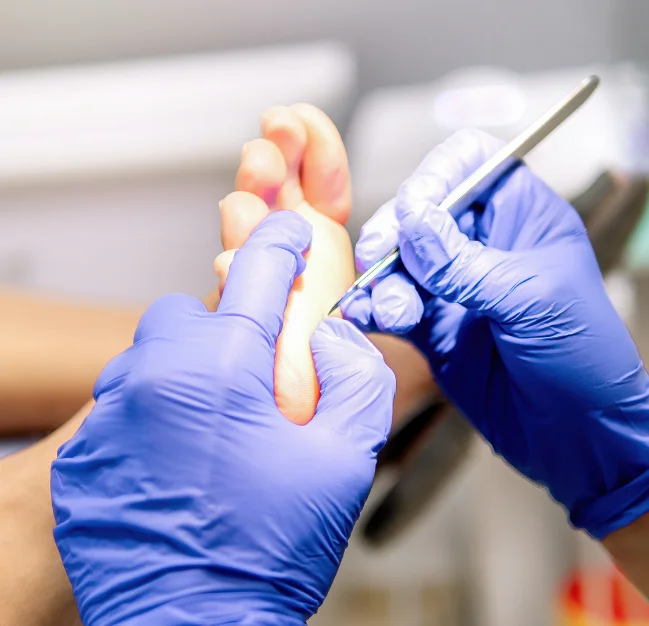
Nail trimming, debridement, and callus care. Coverage often depends on documented systemic conditions and class findings, so we check documentation and modifiers before claims go out.
Wound care and debridement
Treatment of diabetic foot ulcers and other lower-extremity wounds. We review wound measurements, depth, and debridement documentation so claims match what was performed.
Surgical procedures such as bunion and hammertoe correction
Forefoot and ankle surgeries that often require prior authorization and proof of conservative treatment. We also track global periods so post-op visits are billed correctly.
Ingrown toenail procedures
Partial and complete nail avulsion and matrixectomy. We check procedure coding and modifiers, especially when billed with an office visit.
Orthotics, diabetic shoes, and inserts
Custom and prefabricated devices billed as DME. We verify coverage in advance and review prescription and certification requirements.
In-office imaging and diagnostics
X-rays and other in-office studies. We confirm that orders, interpretations, and documentation are in place so the services can be billed.
Common Podiatry Codes and What to Watch
| Code | Description | Common Issue |
|---|---|---|
| 11720 / 11721 | Nail debridement (1–5 / 6 or more) | Routine foot care rules, Q modifiers, and class findings documentation. |
| 11730 | Nail plate avulsion, partial or complete | Toe modifiers, and modifier 25 when billed with an E/M. |
| 11750 | Nail and nail matrix excision, for permanent removal | Documentation of the condition and toe modifiers. |
| 11055–11057 | Paring of benign hyperkeratotic lesions (1 / 2–4 / more than 4) | Lesion count must match the note. |
| 29540 | Strapping of ankle and/or foot | Often bundled. Check payer edits. |
| 97597 | Selective debridement of open wound, first 20 sq cm or less | Wound size and depth documentation. |
| 28285 | Hammertoe correction | May require prior authorization. Conservative care history matters. |
| 28296 | Bunion correction with distal metatarsal osteotomy | May require prior authorization. Imaging and failed conservative care should be documented. |

Orthotics and Diabetic Shoe Billing
Comprehensive Billing and Revenue Solutions for Podiatry Practices
Precise Claim Filing and Administration
Claims are reviewed for coding, modifier, and documentation issues before they go to payers, and our team follows each claim through to payment.
Insurance Eligibility Verification
A team of experts thoroughly verifies insurance eligibility and confirms the scope of coverage provided to patients.
Coding Compliance
Our coders review podiatry claims against current CPT and ICD-10 code sets and payer policy before submission. We track denial patterns by payer and procedure and share what we find, so documentation and coding gaps can be fixed at the source.
AR Management
The company diligently manages accounts receivable, with an expert team that swiftly identifies and resolves potential issues.
Personalized Solutions
We tailor our billing services to meet the unique needs of podiatry practices, delivering a personalized approach specifically designed for podiatric care.
How Our Podiatry Billing Process Works
Workflow review
We review your EHR, fee schedule, and current denial patterns
Eligibility verification
We confirm coverage and benefits before the visit, including routine foot care limits.
Coding and charge review
Codes, modifiers, and diagnosis links are checked against the documentation.
Claim submission
Claims are reviewed for payer edits before submission.
Payment posting and denial follow-up
Denials are worked, appealed where appropriate, and tracked by cause.
Reporting
You receive regular reports on collections, denials, and A/R aging.

Why Podiatry Practices Work With Medix Revenue Group
- Enhanced Overall Cash Flow
- Reduced Claim Denial Rates
- Prompt Reimbursement
- Optimized Revenue Cycle Management
Software and Systems We Work With